
 Alumni
 FSOP Ladies
 Harvester & Articles
 Harvester Podcast
 Lectureship
 Lectureship Audio
 Lectureship Video
 Debate
Youtube Videos
MP3 Podcast
Summary
In this conversation, Rick Kenyon explores the essence of evangelism, challenging common stereotypes and misconceptions. He emphasizes the importance of integrating evangelism into daily life, inviting others into a friendship with God, and understanding that obedience to God is not dependent on the outcomes of evangelistic efforts. Kenyon discusses the balance between urgency and patience in evangelism, the need for flexibility in methods, and the significance of genuine relationships in sharing faith. Ultimately, he encourages listeners to let their love for God overflow into their evangelistic efforts.
Chapters
00:00 – Introduction to Evangelism
03:00 – The Authority of Jesus Christ
06:00 – Qualifications for Evangelism
09:00 – The Great Commission
12:00 – Integrating Faith into Daily Life
15:00 – Personal Relationships in Evangelism
18:00 – Obedience and Flexibility
21:00 – The Power of God’s Word
24:00 – Inviting Others into Friendship with God
Transcript *This transcript was automatically generated and may contain errors.*
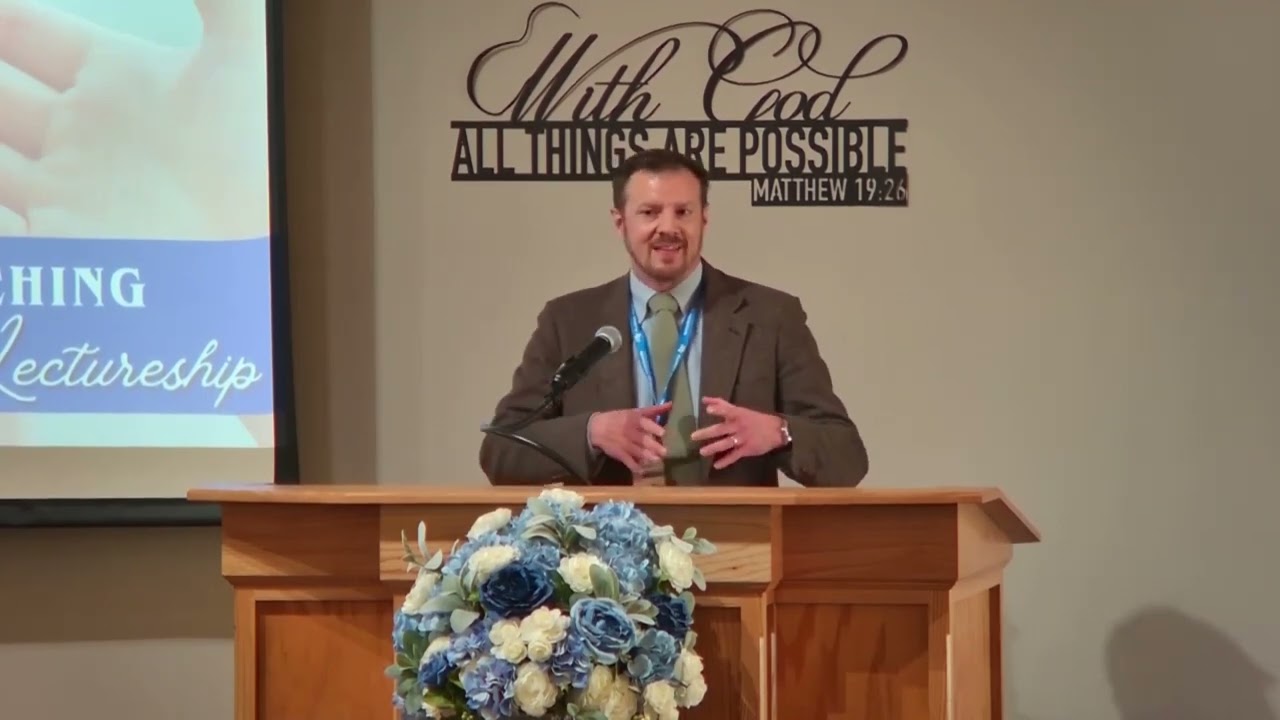
Rick Kenyon (00:04)
All right, question for consideration. I want you to picture who you consider to be the greatest preacher that you know of in the past century. In your mind, don’t say it out loud. It could be someone living, someone dead. I was like, man, and just want you to think of that person just for a moment, who you consider to be the greatest preacher. Man, I really wish, I’d love to hear them, whatever it might be. And then ask yourself this question, what makes them great?
What makes him such a great preacher or presenter of the word, a great expounder upon spiritual and scriptural things? Then ask yourself the question, who’s the greatest evangelist you know in the past century? Maybe it’s the same person, maybe it’s not the same person. Who’s the greatest Christian you’ve known in the past century?
That’s not really a fair question, is it? Because there’s so many Christians, we can’t really rate them. ⁓ yes, that’s the point. And so this lesson is ⁓ debunking stereotypes of evangelism. And as we go through it, there’s a number of ways we can approach it. I think what I have written, I have written.
We’ll say in the book, but just to recap a lesson from yesterday, think ⁓ Dylan just gave us five quick lies about it, which I thought went along with my lesson, so I’m just repeating what he said. Five lies of evangelism, it’s someone else’s job. That’s false, it’s not cut out, I’m just not cut out for it, wrong. People are just interested, aren’t interested in spiritual things, false. Evangelism can wait, false. Evangelism just doesn’t work anymore, false. But I also have a few
I’m just going to run through real quick, as quick as quick can be, and then I have about four principles.
that we can use within our lives to debunk stereotypes of evangelism. Rather than identifying and going through one by one, I’d rather take that approach, but a stereotype for our own understanding. A culturally accepted truth shaped by oversimplified and or ignorant conclusions, ⁓ experiences or expectations. That’s not from Google, I made it up.
But that’s what a stereotype is and really stereotypes aren’t always bad Sometimes they just help us formulate something to expect when you walk into Publix You expect to get good service, right? The stereotype there is shopping is a pleasure and everyone you encounter is gonna have a smile on their face If not, they’re not gonna be there next week That’s how that works you walk into Walmart Shopping is the necessity not a pleasure
And it’s different, it’s a stereotype. But every now and then, you meet someone at Walmart that says, you should be at Publix. Because in our minds, we think to ourselves, this person doesn’t fit this role, this model. And when we do that, we do a disservice, I think, to people, organizations.
All over, so here’s just a few kind of pops, make a list here. Evangelism, these are things that evangelism is not. It’s not blasting the truth to denominations. Weaponizing the truth can never be interpreted as love. ⁓ Evangelism is not cheerleading for your church. The church of Christ should put Christ before the church always. It’s not spiritual salesmanship.
A farmer does not have to sell the seed to the land. He just sows it. Evangelism, the seed.
Just because a congregation is growing does not mean a congregation is evangelistic. Probably this area specifically, people move in and come out of the blue like, man, we’re doing well, our church is growing. But you’re not evangelizing. You’re not reaching people, they just come off the street, come in and join themselves to you. That’s not evangelism. ⁓ Fixing doctrinal misbeliefs.
Beliefs are equally important as actions. Those are important, but that’s not what it’s all about. ⁓ Evangelism isn’t just a way for you to ⁓ preach the truth and justify your dismissive personality. I just gotta tell it like it is. And if they don’t like it, they don’t like it. That’s how Jesus thought, I think. I don’t think. Exact opposite. Vaginism is more than spiritual midwifing.
⁓ know, midwife is one who helps bring the baby along and too often I think that’s people see evangelism is they want to bring people in and that spiritual baby into the water and out of the water and midwife’s job is done.
because man, it’s so exciting to see that new birth and we love that fresh new baby smell, whatever that means. But in the church, I think there’s that same idea of spiritual midwife and we wanna just have that opportunity and run with it. Baptism is a part of one’s spiritual journey and we are brothers and sisters in Christ, not spiritual specialists.
It’s more than the act of just preaching or handling a Bible study. And just because we’re effective with one group or one person or one location or one congregation does mean we’re gonna be just as effective with another person, another group, another congregation. That’s what makes it so unique. ⁓ Also, let’s see, foreign missions is the best way to get people excited about evangelism. And I don’t deny that’s a way for people to get…
That is a method to get people excited about evangelism, but ultimately and truly, evangelism should flow from our heart. And that’s not a shame on you if it doesn’t kind of thing, but that’s just the reality is sometimes we forget that process and we’ll get to that in just a minute. And then finally, it’s not just a man’s job with women to help. It’s a Christian’s job for Christians to help. And so that’s just some of those in a nutshell.
But four principles here I want to discuss that hopefully will help us understand some ways that we can evaluate our own thinking and grow from that. Number one is integrate, don’t separate, evangelism.
And James chapter one verse 21, receive with meekness the implants of word that’s able to save your souls. The implants of word comes within us. We are to produce spiritual fruit, the fruit of the spirit, our Galatians chapter five, right, or 22, 23. And how do you sow the seed? You sow the seed from the seed that’s in your heart that’s producing the fruit that has the seed that you can give to others.
That’s how that works. That’s what the spiritual seed is. It’s the difference between compartmentalizing something. In the world, we may decry people who consider themselves religious and faithful because they go to church on Sundays, maybe even on Wednesdays. And Christianity is a big part of their life. it’s like you have this, ⁓ it’s like maybe you put your house in your heart and you have this idea where the Lord, God has a master bedroom.
and I’m just sleeping in the closet. You what the problem is? God wants your whole heart, not the master bedroom in your heart. And that’s where we missed the point where he has to take the entire thing. It’s not a part of your life, it’s not a part of your heart, it’s your whole thing. Faith is our whole life. It’s wrapped up into it. And evangelism, I think, is not so different.
It is an attitude before it is an action. It is like submission. We must have an attitude of submission before we can act and be submissive. We have to have an attitude of forgiveness in order to forgive. And when we pinpoint and try to dice down, when did I forgive, when should I forgive, or when should I submit, when should I not submit, we’ve missed the point. Because our goal is we want to forgive. We want to submit. We want to evangelize and reach people. The question is, do I have to do it, or whose responsibility is it? It’s wrapped up into it.
I think in the paper, I put it this way, if you have a cake and you cut like half that cake as my piece, and the other half is the rest of your pieces, that’s fine. That half piece of cake…
is not evangelism, well I’ll make it 90%. The point is like evangelism is the sugar that goes into it or the flour, whatever you wanna call it, but it’s an ingredient. So every piece of that cake you cut, guess what’s in there? Evangelism and love and peace and every fruit of the spirit and every action and submission and loving my wife and loving, that’s the whole point. It is an attitude that’s wrapped up in the whole process of it. And when you think and consider those things, I think there’s ⁓ a natural flow that comes from
into it. And so that means your spiritual life greatly affects your evangelism. Husbands, live with your wife with understanding. Treat them as a weaker vessel, let your prayers be hinder, 1 Peter 3 verse 7. We don’t think of our personal life as evangelistic.
But yes, I lead my wife and we are helping each other get to heaven. Parenting is a form of discipling and the fact that we have somehow cut off and we have separated and specialized discipling and evangelizing and preaching and teaching and encouraging, I think helps us in a sense but I think it harms us in a sense. Because when was Jesus not evangelistic? When was Jesus not loving?
When he goes out and he escapes the people too early in the morning or late at night, he’s praying all night, he’s giving himself to God. Do you think that affects his evangelism? Sure. You think it refuels him? Sure. And so for us, I think that same thing has to be taken into consideration. Evangelism is a natural overflowing of our joy with God. so integrate, don’t separate evangelism. Number two, ⁓ invite people into your friendship with God.
That’s what evangelism does. Are you a way to invite people into your friendship with God? If you have a really good friend that your other friend doesn’t know, and he’s like, I think the three of us should get together and this would be pretty neat. And maybe you’ve seen this before where you get your friends together and then realize like, uh-oh, this is a bad idea. I think he likes him more than me.
Maybe it’s more a girl thing than a guy thing, I don’t know. But sometimes there’s that melding of friendships and really that’s what evangelism is, is taking my relationship with God and my friendship with God and inviting people into that friendship. And that should not be something that we have to kind of force. It’s sad that in the church, we feel more comfortable, we don’t feel comfortable talking about spiritual things. And I think we have to ask ourselves this question, is how much do you love the word
When I say invite people into your friendship with God, what kind of friend are you to God? Yeah, man, inviting people to worship services, that’s a great thing. But please tell me that your relationship with God is more than just coming to a service on a Sunday. But for some people, that’s all it is. And so I’m doing my evangelism. I understand where they’re coming from, but there has to be a deeper version of that. And so if we want to get excited about evangelism,
Get to know your Lord on a personal level. Take in the word of God, listen to it, meditate upon it, think about it, memorize it, wrestle with the word of God. I think too many people spend more time reading books by faithful brethren than they do by God. I think we spend too much time listening to podcasts and spend time listening to studies and devotionals which are helps more than the word of God.
The word of God is what changes. It’s not a sermon, not a preacher, not a preaching, not a book, not a series, not a whatever. It’s God’s word. And until we are convinced of that in our own hearts and our own minds, it won’t change. And the stereotype will always remain, it will be that cultural assumption of what it is. And that’s what’s hard because we live in a culture that frames it for us.
And so make sure that we ourselves are giving ourselves to God, reading and praying and talking to him and building that relationship with God. And you might think, I need these helps to do it. That’s fine. You know, here’s another step we can do in this idea of inviting people into your friendship with God. Invite your fellow brothers and sisters into your friendship with God too. That falls under that category.
You know, I think we have misunderstood it. We talk about Bible studies as if it is a way for us to leverage the lost into heaven. But if the only Bible study we’re doing with people is just to convert them, we are missing out. We are in a dangerous, unprecedented place. The only time we have Bible studies is to tell people what we know and how to get to where we are. We’re missing out.
There’s so much more to the Bible than just in Bible studies and trying to get people out there to in here. I mean, how many Bible studies you have with each other going on? I mean, that should be a given, I think, right? You go to a place of people who love God, we love Lord. Well, who you studying the Bible with? I don’t have any prospects yet. I didn’t mean prospects. I mean, like, who are you just studying the Bible with, reading the Bible with? Start those simple things and so that friendship grow as you go through it.
So, do you have that healthy practice? And ⁓ we have to be careful that our relationship with God isn’t pushed aside for the sake of evangelism. It’s a sad situation when people feel like they have to sacrifice family or church time because they have to evangelize.
Like that philosophy is already distorted. The idea is I love my wife in a way that helps me evangelize. And I love my children in a way that helps me evangelize. I serve in whatever capacity that helps me evangelize. And it doesn’t have to be a preacher, a minister, it don’t have to be some on the leadership in the church. know, what makes Paul so great as an evangelist? Man, like we have all these different things he’s done. We know the most about him. How about Thaddeus?
Yeah? Or James Aless or how about these other people that we know nothing about, we just know their names. We never say I want to be like him. I want to be like Rufus in Acts 16. Where’s my Rufus’s at? Raise the Rufus? No. So yeah, these are people that are unknown, but here’s the point.
We like what we know and as we invite people into a relationship with God, we’re sharing what we know about God with them. All right, so number three here, moving along. You could have taken my 15 minutes, I wouldn’t have complained. Number three, remember that obedience is unaffected by the outcome. Matthew 13 verse three, Jesus opened his mouth, he taught them a parable, I saw or went out to sow, period. That’s the job.
Do not confuse the goal of evangelism, which is to sow the seed with what we would consider the ideal result of evangelism. And what we think of the ideal result is someone that’s coming from a lost state to a safe state. Yes, that is a wonderful thing to witness, and we want people to be saved. But just because the outcome isn’t what we wanted it to be doesn’t mean that we’re not effective as evangelists. Noah preached 120 years. You want to call him ineffective?
How about Isaiah? How about Jeremiah? No, we want to be effective like Jonah, right? Because Jonah preached a few short words and the whole town repented. That’s an effective evangelist. If we’re going to go by results. Let’s be like Jonah, right? Whoa, wait a second. No. So when we talk about, man, he’s a really effective evangelist. Look at his results. Noah’s results? No, Jonah’s results. Be a Jonah.
you wouldn’t say that because we see what kind of character Jonah has. And our evangelism isn’t, you know, result of what we did and what God does through us doesn’t somehow justify our moral failings. And so when we think about obedience, it’s unaffected by the outcome and the results do not diminish your obedience to evangelize. And that’s what’s hard. People say, how’s the work going? I don’t know.
Like I know what it feels like right now, you’re at a period of peace, work’s going well, huh? Maybe, you know, we’re going through a period of growing right now, there’s a lot of friction and straining, it’s like oh, work is not going well. I’m not gonna say what kind of work God is doing just because of where I’m at in that level. How’s the work going over there? Jonah, oh I’m hating, it’s terrible, people are repenting, I wish they wouldn’t.
Ezekiel 3, Ezekiel 33, we’ve heard those pastors mentioned before, you’re the watchman blowing the trumpet, how’s the work going? And it’s like, well I’m blowing trumpets. That’s all you gotta do. People come, people go, that’s not on you. And so for us, we have to remember, obedience is not gonna be affected by that. Also remember this, that talent does not enhance or restrict your obedience to God.
One thing that is powerful about God’s Word and about the wisdom of God, the fear of the Lord’s beginning of wisdom, Proverbs chapter one, is that the wisdom of God is never based on an IQ level. His wisdom is based upon your trust level. Do you love God with all your heart? You can be the dumbest man in the world and most faithful man in the world.
You can be the sharpest man in the world and the most sinful man in the world. Your IQ doesn’t get you further or closer from God. Your talent doesn’t get you further or closer from God. And I think we have to be careful that we aren’t creating an atmosphere and a stereotype that says this is what evangelism looks like. Like this man can talk to anybody on a plane or a grocery store and like his abilities are so impressive. Man, like how can I be more like that? No, no, no, no, no, No, don’t confuse.
Natural talent should not be the goal of what we’re trying to copy. What he is gifted with is not what I’m trying to do. And it’s easy for us, because we see those things and we may crave those things. I wish I had what he had. I wish I could do what she could do. But in a sense, that’s not the goal. I mean, we are blessed with our failures and our strengths. And God does great things with both of them.
You look at the men that people, that God worked through it throughout the Bible, through the judges, the moral failings, and the people like Abraham, Isaac, and Jacob, the liar, the trickster, the liar, the failure, the murderer, I mean, of Moses, the one guy that did not want to go back to Egypt was the only guy that left Egypt and never wanted to go back and led the people who always wanted to go back. There’s so many nuances of those type of things in scripture that we can’t… ⁓
fail to recognize that our talent does not make us more obedient to God or less obedient to God. You what we should do? We should have an evangelism off, right? We should see who can win the most souls by the end of the year. You say they’re like, oh, that sounds, I don’t know, maybe it’s a good idea, right? Oh, that’s a terrible idea. We can’t really do that, can we? Well, hey, let’s line up preachers and see who has the best sermons and we’ll showcase them. Wait a second. I don’t know if that’s really comfortable either.
Well, what are we doing when we start rating preachers and evangelists and people and we put it on this ranking system, we say we need to be more like this and less like this.
Like our evangelism should never be, obedience is never talent based. I should not be able to exercise that. You look at who Jesus called the fishers. I’ll make you fishers of men. The tax collector. He shouldn’t be there in the first place, most people said. And so as we look into our own lives and we look at the stereotypes that sometimes evangelism has, remember that our obedience is not affected by the outcome. And then finally here, don’t conflate urgency with
patience. You can be urgent and be patient at the same time. That is like the story of the Bible. God’s urgency of calling people but his patience is long. We should echo that same thing. Sometimes I feel like people when they see a shot they got to take it and if you only have one shot to take you don’t rush the shot. You steady it. You sight it. You breathe properly.
You calm yourself and then you pull the trigger. But for us, it’s like if I get it in, I’m gonna blast the truth and let them know what’s going on, for the name of God. And we chuckle some of those things like, I went to that church and I told them the what for and man, they didn’t invite me back, but I told the truth. And we say amen to that. What if I gave a lesson that was still true but didn’t blast the truth right in their faces? And I get to go back.
What if there’s a situation where I extend the relationship that, you know what, I’m playing the long game. Like, we don’t have time for that. You know, it’s interesting. Short little story here about urgency and impatience. ⁓ We have to be careful and evaluate each person and be aware of our efficiency mindset.
We as American people love efficiency, We want our cars to be cheaper, last longer, and go farther. We want our food to be faster, taste better, and be healthier. And we want to do everything the most efficient way possible. What’s the quickest route from here to whatever? And we’re going to put, even though we know where we’re going, we’re going to put it in GPS. Why? This can tell us the most efficient route. It says, don’t go this way, there’s a wreck. OK, I’m not going to take I-4. Praise the Lord. You we’re going somewhere else.
You understand that, but do realize God doesn’t operate on efficiency scale? How long was it before Israel left Egypt? 400 years? Sometimes efficiency is not in your lifetime. We think God doesn’t work in my timeline. God doesn’t work on your lifetime. And that’s what he works through you and with you. But we have to be careful that we don’t have that. one thing, when I got to New Mexico, is interesting is.
A few months in, we get a knock on the door and local Jehovah’s Witnesses come to the door. Like, oh yeah, Jehovah’s Witnesses, here we go. And they say, are you concerned about the state of America? I said, always I guess, I pray for them. Do you think that our government is secure? I said, I don’t know, I don’t follow government or politics or anything. They go, so do you believe that there’s a kingdom? Like, yeah, I believe in the kingdom of Christ. And so, long story short, we invite, get a conversation going, let them know who I am, where I’m at, why.
I’m
there and we do a Bible study and we do a second Bible study and a third Bible study and on that third Bible study we kind of said well is I don’t know if we can continue our study here we’ve done three studies and it doesn’t seem like you’re gonna change your mind I’ve given you three studies and it doesn’t seem like you’re gonna change your mind
And to which I responded is like, surely you don’t think me, as I told him my whole background, I grew up within the Church of Christ and I’ve been trained at a preaching school and I went to university, I’ve got a couple bachelors, I got a minor. I have all this information I’ve learned from my years of youth up and you think three studies is gonna do it?
He’s like, well, I just know when not to quit. Okay. Two weeks later, he calls me back and we continue to stay for six months. Six months. Or should I just write then and there, say John 1-1 and blast him down with the truth? Should have done that. That’s what we should do, right? But why waste your time? What was the result? Did he get saved? No, he’s still an elder in the Jehovah’s Witness place. He’s also a friend.
Coffee sometimes, see him washing windows, a wave at him. We had a conversation, we grow through that, but you want to talk about organization. Oh man, they have an app and they have their studies and they say this, we’re only going to use the Bible. That’s what I say. He says, we believe that worship must be done in spirit and truth. That’s what I say.
I mean, you talk about organized. They invited me to of the Tuesday night services and I went and they’ll come up here and they’ll bring people from their.
congregation and they’ll go through mock Bible studies and conversations. are, you’re the teacher in the break room and you’re the witness and how are going to strike up a conversation that’s not offensive and how can we direct it? And they go through the whole process and it’s like, yeah man, we should be doing that. We should be just like Jehovah Witnesses, shouldn’t we? In our evangelism methods. They got to organize, they have it done. Evangelism, if we have an emphasis on evangelism, we’re a healthy church. See the Mormon church, see the Jehovah Witness church.
They have the market on that thing. And I talked to a Mormon missionary recently and asked him, what’s the average? know it was like 15 years ago, two to 10 people on a two-year mission in America, what is their average door knocking? He said, yeah, it’s about the same. Nothing to shake your head at.
But here’s the point I’m getting at. When we think of stereotypical evangelism, that’s what people think of. And we have to be careful not to just wrap ourselves around that and think I’m not talented in this and I know there’s urgency in it. We have to have the patience. so some truth must precede other truths. And it’s those judgment calls that will prevail. And so remember that obedience is unaffected by the outcome. And then finally here, number four, allow others to be flexible.
In 1st Corinthians chapter 9, is again, inside of a four verses 19 to 23, Paul, he is ⁓ explaining and teaching us. He tells us, to read it here.
Verse number 19, 1 Corinthians 9, For though I’m free from all, I’ve made myself a servant to all, that I might win more of them. To the Jews I became as a Jew in order to win the Jews. To those under the law, became as one under the law. Though not being myself under the law, that I might win those under the law. To those outside the law, I became as one outside the law. Not being outside the law of God, but under the law of Christ, that I might win those outside the law. To the weak, I became weak, that I might win the weak. And I become all things to all people that.
by all means I might save some. I do it all for the sake of the gospel that I may share with them in its blessings. Can we stand before judgment and that we have done everything we can to bend over backward to breach people for God? That will be a question I think that we can ask ourselves. I have keys, well, I don’t have my car so why take my keys? So I just brought the other part of my keys?
But I keep on my key ring as a good girl dad would do this little hair tie. Because look at this. Isn’t that fun? It’s elastic. But it has its limits. It has a limit here of elasticity. And we’re talking about being flexible. You you think, like, yeah, that’s some flexibility. But I also have this rubber band, super tiny. Look at that flexibility.
You know, I might be able come around this microphone with this, barely, but I won’t make noise. But then you have this one. Whoa. Look at that. Look at that. This rubber band says, no, this isn’t right. You should not be able to do this. This is too much. But this rubber band is not this rubber band. When we look at evangelism,
There’s two different purposes and two different things. We’re not all designed to reach the same people. That’s how we’re built. Next question. You can raise your hand if you want. How many of you can bend down and touch your toes without bending your knees? Yeah, I don’t know if I want to answer that question, right? According to Google, half-ish of Americans can do that. But then there’s another portion of Americans that are just crazy.
They can put their whole palm on the ground. They can put their head to their knees. That’s not right. You know what I mean? That flexibility, that doesn’t look right. And it shouldn’t be like that. That’s how we treat evangelism sometimes. You’re reaching people in way that I would never do it I can’t do it, so you shouldn’t do it that way.
Be careful that our preferred methods of evangelism doesn’t become the method of evangelism. And I haven’t heard that anywhere. I don’t think that’s been promoted in any sense or form. But we also have to take a step back and say, hey, how you reach people might be different from how I reach people. If I engage with a guy, small town, I get to meet different people. there’s the Baptist pastor, the Methodist pastor. They all arrived around the same time I did. And as I meet them and talk to them,
hey we should get together for coffee. said sure we get together for coffee and he’s like what you can’t talk with them they’re they’re they’re Baptists and Methodists you know but when this guy tells me he’s like yeah I changed the name I took the Simmons of God off the church because I just want to be known as the church I just want to teach people to be Christians and make Christians. That’s not a bad heart. Some of most spiritual discussions I’ve had with are those in denominations. What does that say about us?
Nothing bad. And so yeah, we have coffee and I’m like, hey, we should get together and do a pre-denominational assembly. Pre-denominational, yeah, yeah, not non-denominational. Everybody’s non-denominational now, but pre-denominational. You know, we’ll only use the Bible. We’ll only do what they do in the Bible. So if it’s not found there, we’re not gonna do it. it’s not a bad idea. Not a bad idea. So maybe that’s a terrible method. Maybe it’s a great method. Maybe that’s something you say, well, it depends on how it turns out. Doesn’t matter how it turns out.
sew the seat. And whether you’re this tiny little white elastic band that’s designed to fit around fingers without falling off, you need those. Because sometimes I need a reminder, and we’ll just forget, this doesn’t help me. But if I want something bigger to put around it, I can. Each rubber band is different. I don’t have the long hair, never did, and I’m losing more of it. But from what I heard, I think people would rather have this in their hair.
than like this in their hair. That’s probably more comfortable. And know what? That’s okay.
As we look at evangelism, there are a thousand different methods, a thousand different materials, and we can say one is better than another. We can say one is greater than another. One is more, I don’t know if the word more effective is the right terminology. We have to be careful in our metrics that we don’t say like, it’s all about the baptisms and the Bible studies. And while the book of Acts does talk about numbers occasionally, sometimes it’s just, hey, what God has done in the area. And so as we bring it to a close,
I think we have to keep this in mind right here. A couple things in our ability to be flexible. You cannot copy creativity. Sometimes what works for somebody else in being creative, and I appreciate what was said day before yesterday, is be creative. But the problem is when you’re creative and I do what you’re doing, I’m not creative. That’s called copying. And just because it works for them doesn’t mean it works for me.
And so we have to be, can’t copy creativity. And also do not avoid the people who love God in evangelism. Evangelism is more than just the lost and the stranger.
It’s people in the pews. When people slip away or fall, when they need the love of God, they need to be reminded of the joy of God. The daily grind is a hard thing to do sometimes. People come in day in, day out. ⁓ don’t avoid the people who love God. Those in denominations, maybe they’re not far from the kingdom. If Apollos was preaching the way of Christ, but only knew the theology of the Baptist, would you think him differently? he didn’t know the baptism of John. It’s different. It’s different.
But if people have a heart set for God and you have a heart set for God and they know that genuinely in your heart and mind that He is the center of your life and you’re doing everything you can, you put people together whose heart loves God with all they have and you open up God’s word, nothing bad can happen. Never. You grow whatever happens. And if the heart truly is soft and sincere and the word of God puts it, it will grow into the fruit of God.
That’s how that works. Don’t avoid the people who love God either. How about this? Do you want to be an evangelist to the Pharisees? Who wants to evangelize the Pharisees? Those who think they have all the answers, they have it figured out. And no one denies that the Pharisees say they love God. You know, we talk about evangelizing the lost and the down-broken. That’s emphasized. But don’t neglect the Pharisees.
Paul himself says, wish to God that they would be saved. They have a zeal for God, but not according to knowledge. And how many people do you know or places do you know where their love for God and zeal for God has almost driven them blind to their own culture? The outside my own culture, there is no right way. And you say, I don’t want a part of this anymore. I want out of this. They too need the love of God. And so.
As we bring it to a close, Philippians chapter one, verse 15 through 18, I think it would be a good one to end on. And the goal was not to encourage to take down or anything, just to remind us and to enlighten and expand our flexibility on how to reach people.
But when Paul says this in Philippians 1.15, some indeed preach Christ from envy, rivalry, others from goodwill, the latter do it out of love, knowing that I am put here for the defense of the gospel, the former proclaim Christ out of selfish ambition, not sincerely, but thinking to afflict me in my imprisonment, what then? Only that in every way, whether in pretense or in truth, Christ is proclaimed, and in that I rejoice, yes, and I will rejoice.
Motive aside, method aside, mannerism aside, model aside, whatever it is, let Christ be preached. As long as Christ is being preached and it’s going, and you know, we may not like this model or that model, this one may turn us off or I’m sick if this person did that. If Christ is being preached, if people are coming to God, let us rejoice. Let us encourage people to do that. And if you don’t like the way they’re doing it, then encourage them to keep doing it that way so you can do it a different way. That’s the whole goal of this.
And we need more people laboring as unknown soldiers rather than trying to make the name for themselves for the glory of Christ. That’s what it’s about. I I try as little as possible to tell people that I am a preacher or minister. Not because I’m ashamed of it, not because I’m trying to get them a gotcha mentality, but because when they feel that they hear that, they’re like, you got an agenda. That’s why you me to join your church.
And so I am very blessed when I go to church members’ homes and say, this is my friend Rick. Whoa, a friendship. What a novel idea for a preacher, huh? A friendship with a church member, not just my preacher.
When we can have that kind of mentality and that kind of approach and it’s by people like you and me that we’re just trying to, we just want our love of God to overflow and that’s what it’s about. My love for God and understanding what he’s done for my life personally and what he does in the gospel, what he can do for all people and that flows out of us. That’s evangelism. And it’s using that relationship, connecting it, bringing it to people and whatever method we need to do, whatever questions we need to ask or process we have to go,
You know, every man will give an account of himself to God, Romans 14 verse 12, and may the account that we give be that of, just like your son did everything in his power to save me, I’ve done everything in my power to save myself by your grace, to save my family, to encourage my church family, and to reach those around me. Thank you.