Nov 02 2026
The Suffering Servant – Isaiah 52:13-53:12 (S6E7)
Summary Brian Kenyon teaches Isaiah 52:13-53:12, tracing how the suffering servant is humiliated and exalted, rejected and acquainted with grief, suffers vicariously for sin, submits to God, and ultimately receives victory and reward. The episode connects Isaiah’s prophecy with New Testament passages about Jesus, explaining why the servant’s death and resurrection matter for redemption. Keywords Isaiah 53, suffering servant, Jesus Christ, Old Testament prophecy, vicarious atonement, Christian Bible study, Major Prophets Chapters 00:00 Opening hymn and the Isaiah 53 lesson05:02 Obedience through suffering in Isaiah 5006:28 Isaiah 52: the servant exalted through humiliation09:21 Why the servant suffers before he is exalted11:15 A suffering king, not a political warrior12:30 Rejected, despised, and acquainted with grief15:24 The tender plant and the remnant of Israel17:23 Why followers turned away from Jesus19:18 Isaiah 53: the servant suffers on our behalf21:13 Spiritual healing and reconciliation of Jew and Gentile24:38 The innocent servant’s total submission26:08 Jesus’ silence before false accusations29:01 The servant’s death and burial with the rich31:02 The servant’s victory, reward, and resurrection34:24 Why Christ’s sacrifice was God’s purpose, not plan B35:52 The servant sees his seed and lives forever40:10 Learning the gospel and coming to Christ42:06 Christ defeats Satan and frees people from death’s fear44:02 Christ identified with humanity and intercedes for us47:18 Closing appeal and next study: Jeremiah
Oct 26 2026
New Heavens and New Earth in the New Testament (S6E6)
Summary Hosts Brian Kenyon and Steven Ford examine the New Testament uses of “new heavens and new earth” in 2 Peter 3 and Revelation 21, comparing and contrasting them to Isaiah’s Messianic Kingdom imagery. They argue that the passages point to God’s eternal dwelling for the righteous beyond this world, which will be destroyed. Keywords new heavens and new earth, 2 Peter 3, Revelation 21, Isaiah 65, Isaiah 66, Christian eschatology, Bible study, final judgment, resurrection Chapters 00:00 Introducing the New Testament’s new heavens and new earth02:19 2 Peter 3: scoffers, the flood, and the day of the Lord05:32 Why Peter’s message is about how believers should live08:39 The present heavens and earth pass away13:08 What “elements” and “fervent heat” mean in context18:18 The earth’s works, manuscript variants, and the judgment22:05 Trusting God when Scripture leaves details unexplained25:01 The promise and meaning of a new dwelling31:24 “New” means a different quality, not a renovation37:47 Why biblical pictures of bodies and garments have limits43:24 Reading Revelation 21 after the final judgment49:31 No more sea: the end of separation from God54:05 Isaiah, Peter, and John: the episode’s central conclusion
Oct 19 2026
Isaiah: New Heavens and New Earth – Part 2 (S6E5)
Summary This lesson explores the biblical teachings on the new heavens and the new earth, focusing on Isaiah’s prophecies and their spiritual significance. It emphasizes understanding the Old Testament context to grasp the Messianic kingdom and its future fulfillment. Keywords New Heavens and New Earth, Isaiah, Messianic Kingdom, Biblical Prophecy, Spiritual Dwelling, Old Testament, Eschatology, Kingdom of God, Christian Theology Chapters 00:00 Introduction to Isaiah’s Prophecies on the New Heavens and New Earth01:48 The Creation and the Significance of Genesis 1:1-204:10 God’s Sovereignty and the Spiritual Dwelling Place05:37 Contrast Between Rebellious and Faithful in Isaiah 6607:59 The Judgment of the Rebellious and the Blessing of the Righteous11:47 The Birth of the Messianic Kingdom and Its Enduring Nature15:12 The Role of Gentiles and the Universal Scope of God’s Kingdom17:53 The Final State: Joy for the Righteous and Judgment for the Rebellious21:05 The Eternal Difference Between the Rebellious and the Righteous23:54 Understanding the Context of New Heavens and New Earth in the Bible25:24 Conclusion: The Future of God’s Spiritual Dwelling Place
Oct 13 2026
Isaiah: New Heavens and New Earth – Part 1 (S6E4)
Summary In this lesson, we explore the biblical concept of the new heavens and new earth as discussed in Isaiah, focusing on its spiritual and messianic implications. We examine the Old Testament foundations and how they relate to the Messianic kingdom, providing a comprehensive understanding of this profound prophecy. Keywords Bible, Isaiah, New Heavens, New Earth, Messianic Kingdom, Prophecy, Spiritual Renewal, Old Testament, Eschatology Chapters 00:00 Introduction to the concept of new heavens and new earth01:52 The biblical foundation: Genesis and the Old Testament view of heavens and earth05:52 Isaiah’s explicit mention of new heavens and new earth11:59 The contrast between rebellious and faithful in Isaiah’s prophecy20:08 The spiritual and messianic interpretation of Isaiah’s prophecy30:01 The new way of life and the new nature in Isaiah’s vision39:48 The fulfillment of the prophecy: Messianic kingdom and spiritual renewal42:04 Conclusion and implications for understanding biblical eschatology
Oct 05 2026
Isaiah 7:14-16 – Two Prophecies or One? (S6E3)
Summary In this lesson, we explore the profound significance of Isaiah 7:14-16, examining this passage as two separate predictions, one about the coming Messiah’s birth (Isaiah 7:14-15) and the other about the alliance of Israel and Syria being broken, thus sparing Judah (Isaiah 7:16, where “the Child [the boy, ESV]” goes back to Isaiah’s son, 7:3). Discover how these prophecies encouraged God’s faithful in their lifetime and far beyond when the Messiah would come. Keywords Isaiah 7:14, Messianic Prophecy, Virgin Birth, Jesus Christ, Biblical Fulfillment, Old Testament Predictions, New Testament Fulfillment, Prophecy Interpretation, Shear-Jashub Chapters 00:00 Introduction to Isaiah 7:14-16 and its significance02:11 Historical context of Isaiah’s prophecy in 8th century BC04:09 The long-term messianic prediction in Isaiah 7:1406:10 The short-term fulfillment in Isaiah 7:1607:48 Different interpretations of Isaiah 7:1410:00 The importance of understanding dual prophecy fulfillment11:52 Biblical evidence supporting the virgin birth of Jesus13:58 The significance of Matthew 1:22-23 in fulfillment15:51 The wider context of Isaiah 7 and its historical setting17:55 The theological implications of Isaiah’s prophecy19:50 Summary and conclusion: trusting biblical prophecy
Sep 28 2026
A Holy View from Heaven (S6E2)
Summary In this lessson, we explore Isaiah chapter one, focusing on God’s holiness, the severity of Israel’s sin, and the pathway to restoration. Join us as we analyze the imagery and messages that highlight God’s justice and mercy. Keywords Isaiah, God’s holiness, sin, judgment, restoration, biblical prophecy, Isaiah chapter one, spiritual reflection Chapters 00:00 Introduction to Isaiah Chapter One: God’s Holiness and Israel’s Sin02:10 God’s Holiness Manifested in Judgment of Israel’s Rebellion04:11 Israel’s Sinfulness Compared to Animals and Sick Bodies07:06 The Indictment of Israel’s External Worship and Heart Condition11:11 God’s Displeasure with Vain Religious Rituals14:23 The Call to True Worship in Spirit and Truth16:30 God’s Offer of Cleansing and Path to Restoration20:41 God’s Invitation to Reason and the Promise of Cleansing23:33 The Consequences of Rebellion and the Hope of Restoration28:48 God’s Justice, Power, and the Path to Righteousness33:37 Summary: God’s Holiness and Our Reflection in Isaiah 1
Sep 21 2026
Introduction to the Book of Isaiah (S6E1)
Summary In this lesson, we explore the life, background, and prophetic ministry of Isaiah, the major prophet, and discuss the evidence supporting his authorship and the unity of his book. We also delve into the historical context of Isaiah’s prophecies and their fulfillment, emphasizing the supernatural nature of the biblical text. Keywords Isaiah, Major Prophets, Biblical Authorship, Prophecy, Old Testament, Biblical Evidence, Messianic Prophecies, Isaiah’s Life, Biblical History Chapters 00:00 Introduction to Isaiah and the Major Prophets01:52 The Role of Prophets as God’s Mouthpieces04:11 Isaiah’s Family Background and Royal Lineage06:06 Historical Context of Isaiah’s Ministry07:55 Evidence Supporting Isaiah’s Single Authorship10:13 Messianic Prophecies in Isaiah12:09 External Evidence for Isaiah’s Authorship14:10 Unity of the Book of Isaiah Across Sections16:02 The Supernatural Nature of Isaiah’s Prophecies18:01 Implications for Faith and Biblical Authority19:53 Conclusion and Next Steps in Study
Sep 14 2026
“Bumper-sowed” 21: Lessons From Job (Part 9) – God’s Concluding Lessons on Job
Summary In this episode, we explore the profound lessons from the book of Job, emphasizing trust in God through suffering, perseverance, and God’s mercy. Join us as we delve into Job’s story and its relevance for believers today. Keywords Job, trust in God, perseverance, suffering, God’s mercy, biblical lessons, faith, endurance, spiritual growth Chapters 00:00 Introduction to Job’s story and main themes02:05 Job’s perseverance and trust in God03:58 God’s response and Job’s awe-inspiring encounter05:46 Restoration and blessings in Job’s life08:09 The significance of trusting God’s plan10:07 Job as a biblical example of faithfulness11:55 God’s mercy and compassion in Job’s story14:09 Lessons from Job for believers today16:10 The importance of perseverance and trust18:03 Job’s story in the New Testament references20:04 Final thoughts: Trusting God beyond understanding
Sep 07 2026
“Bumper-sowed” 20: Lessons From Job (Part 8) – The Lord Speaks
Summary In this lesson, we explore the profound speeches of God in the book of Job, focusing on God’s questions about creation and His power, and Job’s response of humility and realization of his limited knowledge. Keywords Book of Job, God’s speeches, Job’s humility, creation, divine power, biblical lessons, Job’s questions, God’s justice, biblical theology Chapters 00:00 Introduction to God’s speeches in Job04:12 God’s challenge to Job from the whirlwind09:46 Descriptions of Behemoth and Leviathan19:59 Job’s response and acknowledgment of God’s sovereignty30:01 Lessons on humility and divine wisdom
Aug 31 2026
“Bumper-sowed” 19: Lessons From Job (Part 7) – Elihu, Good Guy or Bad Guy?
Summary In this episode, we explore the complex character of Elihu in the book of Job, analyzing whether he makes significant contributions to the discussion or merely shows (like Job’s three friends) that he too does not have the answer to Job’s suffering, although he speaks some truth. We delve into the biblical context, Elihu’s speeches, and what his presence reveals about divine justice and human understanding. Keywords Elihu, Book of Job, biblical analysis, divine justice, suffering, theology, biblical characters, Job’s trials, biblical interpretation Chapters 00:00 Introduction to the book of Job00:29 Elihu enters the discussion00:58 What the book of Job does and does not explain01:25 Retribution theology and the friends’ wrong assumptions02:48 The speech cycles and where Elihu appears04:10 Elihu’s introduction in Job 3205:08 Is Elihu a good guy or a bad guy?09:30 Elihu’s first speech: his defense for speaking12:56 Elihu explains why he speaks and invites Job to answer14:52 Elihu misreads Job’s claim of innocence19:30 God’s discipline and the idea of a mediator23:43 Elihu calls on Job to respond24:41 Transition to chapter 34
Aug 24 2026
“Bumper-sowed” 18: Lessons From Job (Part 6) – Job’s Claim of Innocence
Summary This episode explores Job’s claims of innocence amidst intense suffering, examining his past righteousness, current struggles, and the theological implications of suffering for the righteous, even in today’s world. Keywords Job, suffering, innocence, righteousness, theology, biblical lessons, Job’s speeches, divine justice Chapters 00:00 Introduction to Job’s story and themes01:48 Job’s remembrance of his past blessings and righteousness04:12 Job’s physical suffering and emotional distress11:03 Job’s challenge to God and his claim of innocence18:50 Job’s appeal for divine response and justice27:08 Summary of Job’s integrity and lessons on suffering
Aug 17 2026
“Bumper-sowed” 17: Lessons From Job (Part 5) – Job’s Hymn to Wisdom
Summary In this episode, Brian Kenyon explores the profound themes of wisdom in the Bible, focusing on Job chapter twenty-eight. He discusses the nature of divine wisdom, its pursuit, and its significance in living a righteous life, emphasizing the importance of fearing the Lord and turning from evil. Keywords Bible wisdom, Job chapter twenty-eight, divine wisdom, fearing God, biblical principles, wisdom literature, Old Testament, spiritual growth, moral obedience Chapters 00:00 Introduction and overview of Job’s structure01:20 Job’s trials and dialogues with friends03:45 Introduction to wisdom literature in the Bible06:00 Wisdom as a gift from God and its biblical foundation12:03 The ancient Near Eastern context of wisdom15:52 Differences between biblical and pagan wisdom literature20:09 The moral and spiritual dimensions of wisdom24:45 Job 28 as a hymn to wisdom25:00 Where can wisdom be found? The mining metaphor29:17 The inaccessibility of wisdom to human effort31:43 The divine origin of wisdom and the fear of the Lord33:26 Job’s character and the pursuit of wisdom34:50 Practical applications of biblical wisdom
Aug 17 2026
“Bumper-sowed” 16: Lessons From Job (Part 4) – Job’s Friends
Summary This episode explores the lessons from the Book of Job, focusing on Job’s friends’ right and wrong actions, the theology they believed, and how their assumptions affected their support for Job. It emphasizes the importance of compassion, correct understanding of God’s word, and avoiding false theological judgments. Keywords Book of Job, Job’s friends, retribution theology, suffering, compassion, biblical lessons, faith, grief, friendship, theology Chapters 00:00 Introduction to Job’s Lessons on Suffering and Friendship04:15 The Arrival and Compassion of Job’s Friends08:01 The Significance of Mourning Practices and Silence12:17 Recognition and Disfigurement of Job16:33 The Turning Point: Job’s Deep Grief and Cursing the Day of Birth20:50 The Wrong Assumptions of Job’s Friends and Their Increasing Accusations27:28 The Dangers of False Evidence and Misjudgment29:51 Lessons on True Friendship and Support in Suffering
Aug 03 2026
“Bumper-sowed” 15 : Lessons From Job (Part 3)
Summary This episode explores the misconceptions of retribution theology, its impact on human perception, and how it distorts our understanding of God’s justice and love. We analyze biblical examples and discuss why this theology is fundamentally flawed. Keywords Retribution theology, Job, suffering, biblical justice, God’s love, accountability, divine justice, theology misconceptions Chapters 00:00 Introduction to Retribution Theology and Its Misconceptions05:09 Biblical Examples That Challenge Retribution Theology09:58 Impact of Retribution Theology on Human Behavior and Society15:11 Jesus’ Teachings on Suffering and Divine Justice19:55 Job’s Story and Its Lessons on Innocent Suffering25:03 Why Retribution Theology Is Wrong: Key Reasons29:49 What Does True Justice Look Like in the Bible?35:08 Conclusion: Embracing a Correct View of God’s Justice
Aug 01 2026
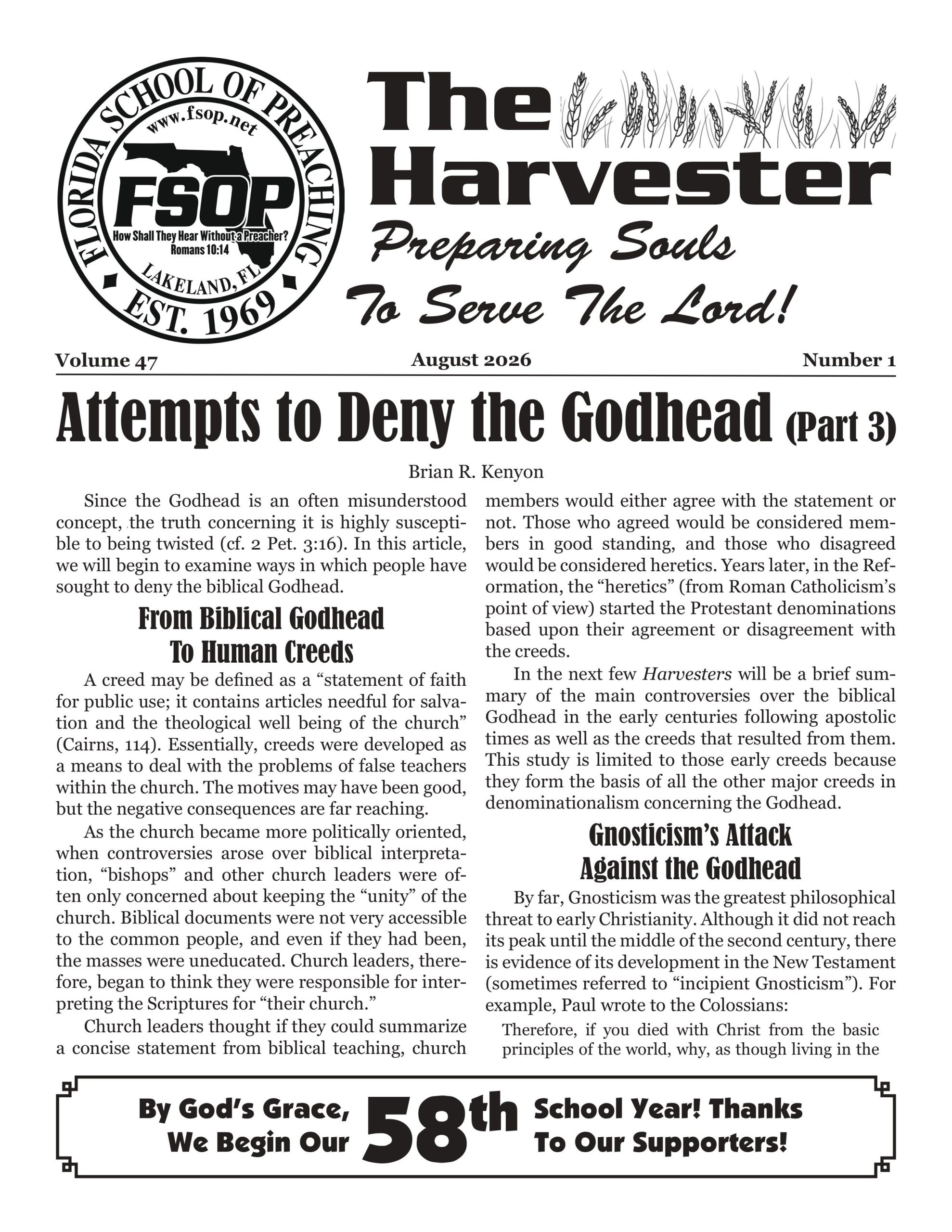
Attempts to Deny the Godhead (Part 3)
By Brian R. Kenyon Since the Godhead is an often misunderstood concept, the truth concerning it is highly susceptible to being twisted (cf. 2 Pet. 3:16). In this article, we will begin to examine ways in which people have sought to deny the biblical Godhead. From Biblical Godhead To Human Creeds A creed may be defined as a “statement of faith for public use; it contains articles needful for salvation and the theological well being of the church” (Cairns, 114). Essentially, creeds were developed as a means to deal with the problems of false teachers within the church. The motives may have been good, but the negative consequences are far reaching. As the church became more politically oriented, when controversies arose over biblical interpretation, “bishops” and other church leaders were often only concerned about keeping the “unity” of the church. Biblical documents were not very accessible to the common people, and even if they had been, the masses were uneducated. Church leaders, therefore, began to think they were responsible for interpreting the Scriptures for “their church.” Church leaders thought if they could summarize a concise statement from biblical teaching, church members would either agree with the statement or not. Those who agreed would be considered members in good standing, and those who disagreed would be considered heretics. Years later, in the Reformation, the “heretics” (from Roman Catholicism’s point of view) started the Protestant denominations based upon their agreement or disagreement with the creeds. In the next few Harvesters will be
Jul 27 2026
“Bumper-sowed” 14 : Lessons From Job (Part 2)
Summary This episode explores the complex topic of suffering in the book of Job, addressing misconceptions about why the righteous suffer and examining various reasons for suffering from a biblical perspective. Keywords Job, suffering, retribution theology, biblical suffering, divine discipline, testing faith, vicarious suffering, redemptive suffering, consequences of sin Chapters 00:00 Introduction to the topic of suffering in Job02:25 The biblical view of retribution theology and misconceptions06:17 Examples from scripture that challenge retribution theology10:07 The law of sowing and reaping and its limitations16:22 Seven reasons why people suffer21:56 The role of testing in suffering26:12 Vicarious and redemptive suffering explained30:51 Consequences of violating law and natural laws33:14 Circumstantial suffering and natural consequences34:38 Conclusion: suffering and biblical truth
Jul 14 2026
“Bumper-sowed” 13 : Lessons From Job
Summary This episode explores the biblical understanding of Satan, demons, and spiritual beings, focusing on their origins, roles, and influence according to scripture. It provides insights into how Satan operates, his limitations, and the spiritual realm’s hierarchy.. Keywords Satan, demons, angels, spiritual beings, Bible, Job, spiritual warfare, deception, false religion, God’s control Chapters 00:00 Introduction to the Harvester Podcast00:58 Overview of the Book of Job01:47 Understanding Satan’s Role06:02 The Misnomer of Lucifer11:40 The Nature of the Devil16:51 Demons and Their Role19:10 The Host of Heaven25:23 The Divine Council30:11 Satan’s Deception and Tactics35:52 Conclusion and Future Topics
Jul 01 2026
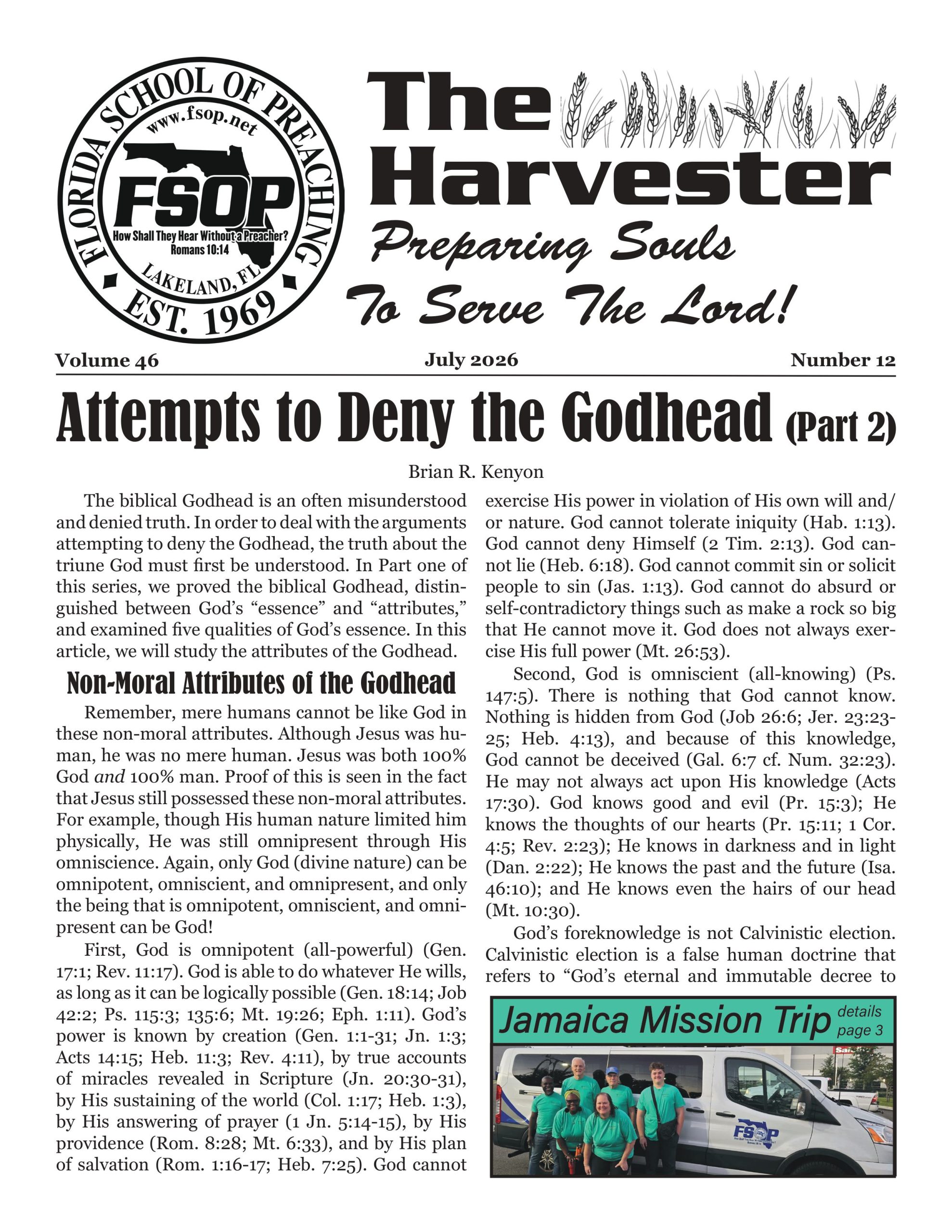
Attempts to Deny the Godhead (Part 2)
By Brian R. Kenyon The biblical Godhead is an often misunderstood and denied truth. In order to deal with the arguments attempting to deny the Godhead, the truth about the triune God must first be understood. In Part one of this series, we proved the biblical Godhead, distinguished between God’s “essence” and “attributes,” and examined five qualities of God’s essence. In this article, we will study the attributes of the Godhead. Non-Moral Attributes of the Godhead Remember, mere humans cannot be like God in these non-moral attributes. Although Jesus was human, he was no mere human. Jesus was both 100% God and 100% man. Proof of this is seen in the fact that Jesus still possessed these non-moral attributes. For example, though His human nature limited him physically, He was still omnipresent through His omniscience. Again, only God (divine nature) can be omnipotent, omniscient, and omnipresent, and only the being that is omnipotent, omniscient, and omnipresent can be God! First, God is omnipotent (all-powerful) (Gen. 17:1; Rev. 11:17). God is able to do whatever He wills, as long as it can be logically possible (Gen. 18:14; Job 42:2; Ps. 115:3; 135:6; Mt. 19:26; Eph. 1:11). God’s power is known by creation (Gen. 1:1-31; Jn. 1:3; Acts 14:15; Heb. 11:3; Rev. 4:11), by true accounts of miracles revealed in Scripture (Jn. 20:30-31), by His sustaining of the world (Col. 1:17; Heb. 1:3), by His answering of prayer (1 Jn. 5:14-15), by His providence (Rom. 8:28; Mt. 6:33), and by His plan
Jun 22 2026
Malachi: Sincere Worship for a Sovereign God (S5E13)
Summary This episode explores the profound messages of the Book of Malachi, emphasizing God’s desire for sincere worship, faithfulness to covenants, and the coming of the Messiah. Join us as we delve into the historical context, key themes, and practical lessons from this powerful prophetic book. Keywords Malachi, Bible study, worship, faithfulness, covenants, Messiah, Old Testament, spiritual growth Chapters 00:00 Introduction to Malachi and Contextual Background01:06 Spiritual Mediocrity and Disrespect in Worship04:08 God’s Call for Genuine Worship10:08 The Importance of True Worship20:32 Covenants and Faithfulness in Worship25:10 Divorce and Covenant Faithfulness30:01 The Weight of Worship and Treachery35:15 God’s Judgment and the Call to Faithfulness40:11 Tithes, Offerings, and God’s Promises45:36 The Final Call to Remember and Obey
Jun 15 2026
Zechariah: Messianic Messenger (S5E12)
Summary This episode explores the profound insights from the book of Zechariah, highlighting its messianic prophecies, historical context, and lessons for believers today. Discover how Zechariah’s visions point to Jesus Christ and the importance of living a life fully dedicated to God. Keywords Zechariah, Messianic Prophecies, Old Testament, Biblical Lessons, Jesus Christ, Prophets, Spiritual Growth Chapters 00:00 Introduction to Zechariah and Its Significance03:09 Historical Context and Background of Zechariah06:00 Messianic Prophecies in Zechariah08:53 The Call to Repentance and Reflection12:09 The Role of the Shepherd and Leadership Responsibilities14:48 Encouraging Others to Seek the Lord17:48 The Importance of Genuine Worship20:46 The Eyes of the Lord: Omniscience and Accountability23:36 Living a Holistic Christian Life26:47 Conclusion and Final Thoughts
Jun 08 2026
Haggai: Consider Your Ways (S5E11)
Summary This episode explores the biblical themes in Haggai, emphasizing the importance of spiritual priorities, obedience to God, and trusting His promises. It highlights how neglecting spiritual duties can lead to consequences, and how obedience and faithfulness can restore God’s blessings. Keywords Haggai, spiritual priorities, obedience, biblical lessons, faith, God’s promises, temple rebuilding, spiritual growth Chapters 00:00 Introduction to the Minor Prophets01:09 The Context of Haggai02:38 Prioritizing Spiritual Over Secular05:36 Consequences of Neglecting God08:53 The Call to Action10:13 God’s Assurance and Encouragement12:18 Building the Temple Amidst Discouragement14:54 God’s Sovereignty and Promises20:03 God’s Discipline and Love22:51 The Role of Community in Faith26:16 Self-Examination and Spiritual Inventory30:37 Physical Blessings from Spiritual Priorities
Jun 01 2026
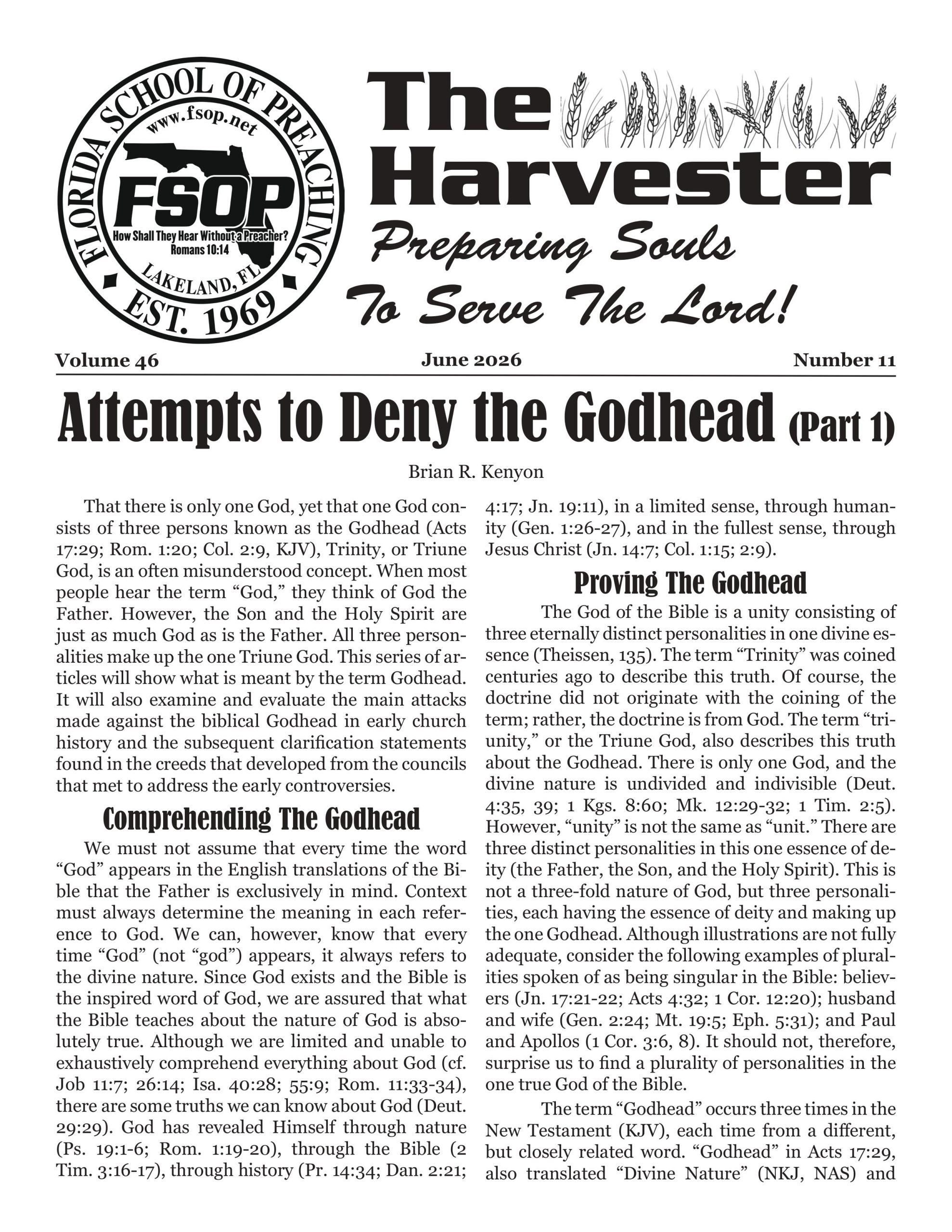
Attempts to Deny the Godhead (Part 1)
The article explains and defends the biblical doctrine of the Godhead (Trinity) there is one God who exists eternally as three distinct persons—the Father, Son, and Holy Spirit. It argues that the three are one divine nature, while having instrumentally distinct roles in God’s plan of salvation.
Jun 01 2026
Zephaniah: God’s Song of Salvation (S5E10)
Summary Explore the profound themes of Zephaniah, focusing on God’s judgment, justice, and mercy, and the hope of restoration for His people. Steven Ford leads this study as it provides deep insights into the historical context, key messages, and practical applications of this minor prophet. Keywords Zephaniah, Bible study, God’s judgment, hope, restoration, minor prophets, biblical themes, spiritual lessons Chapters 00:00 Introduction to Zephaniah and Context03:06 God’s Judgment and the Day of the Lord05:41 Idolatry and Complacency in Judah08:58 The Call for Total Allegiance11:43 The Consequences of Complacency14:37 The Day of the Lord: A Day of Wrath17:39 False Security and the Reality of Judgment20:22 The Helplessness Against Divine Judgment21:44 The Day of the Lord’s Anger23:44 The Call to Seek Righteousness24:27 God’s Judgment on Nations28:36 The False Sense of Security29:30 The Filth of Jerusalem32:36 The Remnant of Hope34:26 God’s Joy in Restoration38:29 The Prodigal Son Analogy40:47 Conclusion and Reflection
May 25 2026
Habakkuk: Live By Faith (S5E9)
Summary Explore the profound themes of faith, divine justice, and God’s sovereignty in the book of Habakkuk. This discussion delves into how believers can trust God’s plan amid chaos and wickedness, emphasizing living by faith and trusting in God’s ultimate justice. Keywords Habakkuk, faith, divine justice, God’s sovereignty, trust in God, biblical study, Old Testament, spiritual growth Chapters 00:00 Introduction to Habakkuk01:56 The Prophet’s Despair and God’s Response05:56 Understanding God’s Use of Wickedness09:39 The Call to Live by Faith13:58 God’s Judgment on Babylon17:39 Habakkuk’s Prayer and Praise21:46 The Righteous Shall Live by Faith25:31 Hope and Restoration in God29:37 Conclusion and Reflection
May 18 2026
Nahum: There Is Only One Refuge (S5E8)
Summary Explore the profound themes of judgment, God’s character, and hope in Nahum, emphasizing God’s sovereignty and the call for repentance and trust in Him. Keywords Nahum, Minor Prophets, Judgment, God’s Character, Hope, Repentance, Sovereignty, Biblical Study Chapters 00:00 Introduction to Nahum: The Minor Prophet00:59 The Context of Nahum’s Prophecy04:25 God’s Character: Justice and Mercy08:51 The Certainty of Judgment12:52 The Fall of Nineveh: A Historical Perspective16:45 The Finality of Nahum’s Message21:08 The Good News of Jehovah’s Victory23:49 Hope for God’s People27:38 The Call to Action for Believers30:21 The Assurance of God’s Protection32:51 The Relationship with the King
May 01 2026
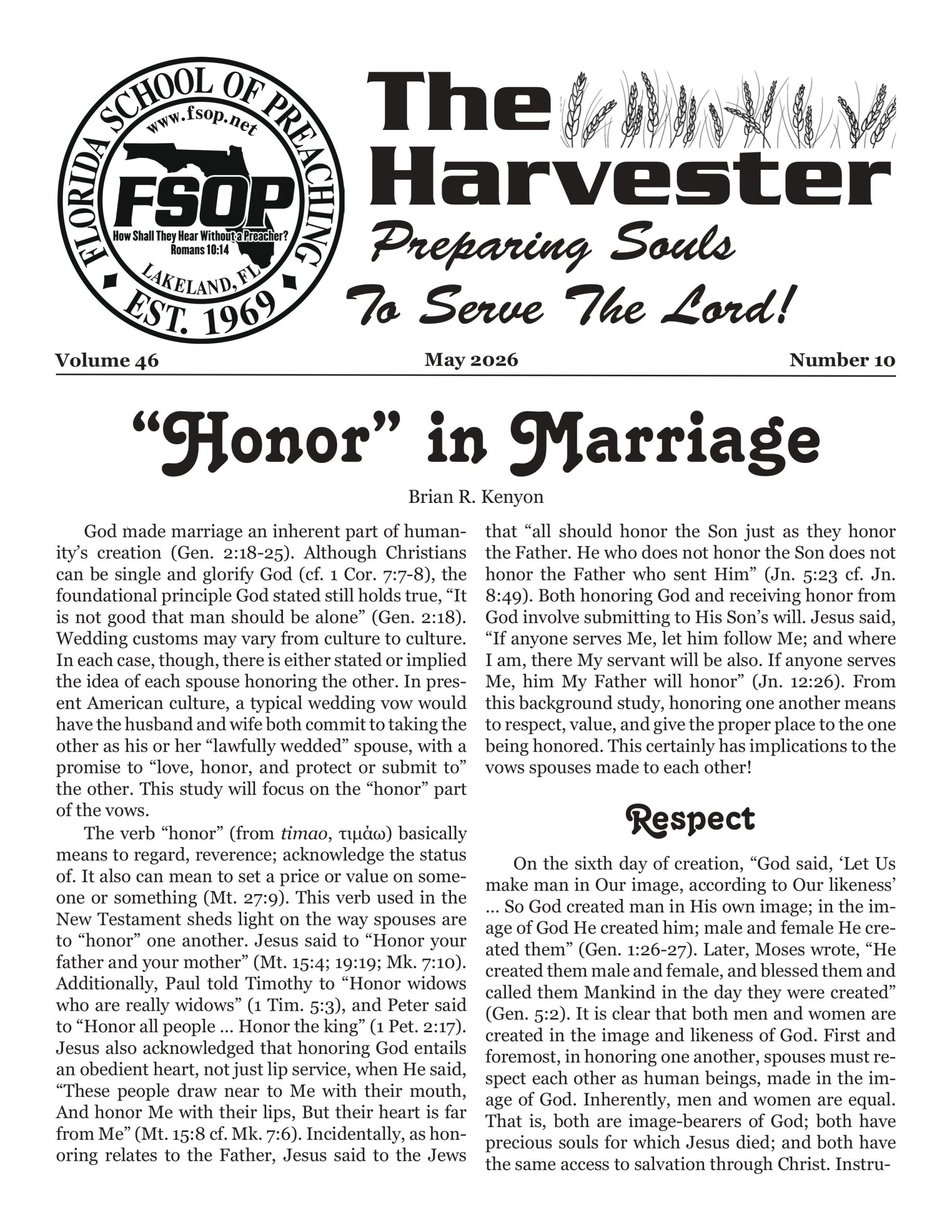
The article explains that honoring one another is a central responsibility in Christian marriage, based on biblical teaching. It argues that while singleness is honorable, marriage is part of God’s design for humanity. The author focuses on the marriage vow to “honor” one another, explaining that the biblical meaning of honor includes respecting, valuing, and recognizing the proper place of another person.
Apr 27 2026
Obadiah: Edom’s Pride; Our Hide (S5E5)
This episode explores the biblical Book of Obadiah, focusing on Edom’s pride, God’s judgment, and the ultimate hope of deliverance through God’s kingdom. It emphasizes lessons on humility, trust in God, and living righteously.
Apr 20 2026
Amos: God’s Roar for Righteousness (S5E4)
This episode explores the profound messages of the Book of Amos, emphasizing God’s justice, mercy, and the call for repentance. It highlights how God’s judgment is certain yet accompanied by hope and restoration, urging believers to seek righteousness and trust in God’s plan.
Apr 13 2026
Joel: From Ravaged to Restored Through Repentance (S5E3)
This episode explores the profound messages of the prophet Joel, focusing on natural disasters as wake-up calls, the importance of genuine repentance, and the spiritual blessings of the new covenant. Discover how these themes connect to biblical prophecy, the day of the Lord, and the promise of salvation for all who call upon the Lord.
Apr 06 2026
Hosea: God Loves His Bride (S5E2)
This episode explores the profound themes of God’s love, justice, and the importance of knowledge of God through the lens of Hosea. It emphasizes the significance of repentance, the nature of God’s covenant love, and practical lessons for believers today.
Apr 01 2026
God’s Will As Our Sustenance
This article explains that doing God’s will should be the spiritual nourishment of every Christian, just as food sustains physical life. Using Jesus’ conversation with His disciples after meeting the Samaritan woman (John 4), the author emphasizes that Jesus’ greatest priority was fulfilling God’s work and leading people to salvation.
Mar 30 2026
Introduction to the Prophets (S5E1)
This episode explores the nature, purpose, and significance of Hebrew prophecy, focusing on the minor prophets. It covers their historical context, the role of prophets as God’s messengers, and the relevance of their messages today.
Mar 23 2026
“Bumper-sowed” 9: What If Diotrephes Withdrew Fellowship from Gaius?
This episode explores the importance of verifying accusations of false teaching within the church, emphasizing the need for love, truth, and careful investigation before taking action. It discusses biblical principles for handling false teachers, the role of love and truth, and the dangers of hasty judgments.
Mar 16 2026
“Bumper-sowed” 8: Are Differences of Opinion in Optional Matters Sin?
In this episode of the Harvester podcast, Brian Kenyon explores the biblical principles of doctrinal unity, focusing on how Christians should handle differences of opinion over optional matters. It emphasizes receiving one another, avoiding condemnation, and encouraging unity in faith.
Mar 09 2026
“Bumper-sowed” 7: Is The “Safest Thing” Always Scriptural?
In this episode of the Harvester podcast, Brian Kenyon discusses the biblical principles behind wedding policies, especially regarding second marriages, and examines whether ‘the safest thing’ policies are truly scriptural or influenced by brotherhood politics. It emphasizes the importance of conscience, scriptural authority, and avoiding binding what God has not bound.
Mar 02 2026
“Bumper-sowed” 6 : The Doctrine of Christ Is Neither “White Doctrine” nor “Black Doctrine”
In this episode of the Harvester podcast, Brian Kenyon discusses the importance of unity in doctrine, emphasizing that there is only one doctrine—the doctrine of Christ. He addresses the misconceptions surrounding cultural influences on doctrine, particularly the idea of ‘black doctrine’ versus ‘white doctrine.’ Kenyon argues that doctrinal truth is not dependent on culture but on the word of God. He also highlights the significance of understanding informal fallacies in discussions about doctrine and the necessity of adhering to the teachings of Christ for true unity in the church.
Mar 01 2026
An Examination of “Non-Institutionalism” Part 2
Part 2 continues the discussion by focusing on the principle of expediency—how Christians determine lawful methods for carrying out biblical commands. Brian Kenyon argues that many disagreements stem from misunderstanding the difference between what God explicitly requires and what Christians may choose as expedient methods to carry out those obligations.
Feb 23 2026
“Bumper-sowed” 5 : Doctrinal Unity – Is Everyone Who Teaches Falsely a False Teacher?
In this episode of the Harvester Podcast, Brian Kenyon discusses the importance of doctrinal unity and the need for correction in teaching. He uses the example of Apollos, a preacher who initially taught false doctrine but was corrected by Aquila and Priscilla. The conversation emphasizes the importance of humility in accepting correction and the need for love and understanding in addressing false teachings within the church.
Feb 16 2026
Practical Summary of First Corinthians 7 (S4E10)
In this episode, Brian Kenyon and Steven Ford summarize the teachings of First Corinthians 7, as they conclude Season 4. They focus on the nature of marriage, singleness, and the regulations surrounding them. They explore foundational biblical teachings on marriage, the importance of peace in the home, and the implications of being married to a non-Christian. The conversation also addresses cultural contexts, advice for virgins, and guidelines for widows considering remarriage. The hosts emphasize the importance of honoring God in all marital situations and the need for a comprehensive understanding of biblical teachings on marriage.
Feb 09 2026
Concerning Widows – 1 Cor. 7:39-40 (S4E9)
In this episode of the Harvester podcast, hosts Brian Keyon and Stephen Ford delve into the complexities of marriage as discussed in 1 Corinthians 7, particularly focusing on the status of widows and the implications of marrying non-Christians. They explore the context of ‘present distress’ that Paul refers to, the meaning of ‘only in the Lord’, and address common objections regarding the marriage of Christians to non-Christians. The conversation emphasizes the importance of understanding biblical teachings and the influence spouses have on each other’s faith.
Feb 03 2026
Concerning Virgins – 1 Corinthians 7:25-38 (S4E8)
In this episode of the Harvester Podcast, hosts Brian Kenyon and Steven Ford delve into First Corinthians 7, discussing the expediencies of marriage and singleness. They explore Paul’s teachings on the present distress affecting the Corinthian church, emphasizing the importance of focusing on spiritual matters over earthly concerns. The conversation highlights the balance between marital responsibilities and devotion to God, the role of fathers in marriage decisions, and the implications of living in a world filled with distractions. Ultimately, they encourage listeners to prioritize their relationship with Christ above all else, regardless of their marital status.
Feb 01 2026
An Examination of “Non-Institutionalism” Part 1
This article begins a two-part examination of “non-institutionalism” within churches of Christ, comparing it with liberalism and arguing that both extremes distort biblical authority in opposite ways. Brian Kenyon defines Liberalism as loosening where God has bound and Non-institutionalism (“anti-ism”) as binding where God has loosed. The article centers on Matthew 16:19 and 18:18, explaining that the apostles were authorized only to teach what heaven had already established—not create new religious laws. This article stresses that no Christian today has the right to impose doctrines God did not bind or prohibit.
Jan 28 2026
God Can Be Glorified No Matter Our Marital State (S4E7)
In this episode of the Harvester Podcast, host Brian Kenyon explores the themes of marriage and God’s glory as discussed in 1 Corinthians 7. He emphasizes that individuals can glorify God regardless of their marital state, including those who are divorced. The conversation delves into the importance of remaining in one’s calling and the implications of freedom and slavery in the context of Christian faith. Kenyon encourages listeners to understand that their spiritual journey and relationship with God can flourish irrespective of their social or marital circumstances.

 Alumni
 FSOP Ladies
 Harvester & Articles
 Harvester Podcast
 Lectureship
 Lectureship Audio
 Lectureship Video
 Debate